
MISSIONE
MISSION
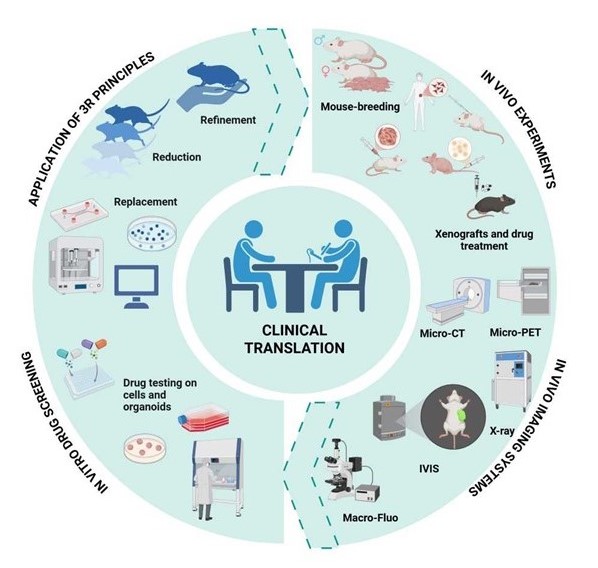
Mission e Obiettivi. La mission della struttura è quella di garantire la realizzazione di attività di ricerca pre-clinica oncologica traslazionale in vivo, nel rispetto delle normative Europee e Nazionali garantendo e sostenendo le attività progettuali dei ricercatori dell’Istituto. Divulgare il principio delle 3R con riferimento agli aspetti etici e del benessere dell’animale da laboratorio e sostenendo lo sviluppo di metodi alternativi
Gestione e Compliance. Il centro funge da interfaccia istituzionale con il Ministero della Salute, le ASL e le autorità competenti, gestendo integralmente l’iter autorizzativo dei locali e le procedure di sperimentazione. Lo Stabilimento Utilizzatore CROM (Mercogliano – AV) opera in conformità al D.lgs 26/2014 ed è certificato secondo la norma ISO 9001:2015. All’interno della struttura è consentita la stabulazione di topi (Mus musculus) provenienti esclusivamente da allevamenti certificati Specific Pathogen Free (SPF).
Divulgazione. La struttura promuove la divulgazione scientifica nel campo della sperimentazione animale mediante organizzazione di corsi interni e convegni e convegni e programmi di sensibilizzazione rivolti alle scuole.
Mission and Objectives. The mission is to ensure the implementation of in vivo translational oncological pre-clinical research, in full compliance with European and National regulations, while supporting the research projects of the Institute’s scientists. We promote the 3Rs principle (Replacement, Reduction, Refinement) with a focus on ethical standards and laboratory animal welfare, actively supporting the development of alternative methods.
Management and Compliance. The center serves as the institutional interface with the Ministry of Health, local health authorities (ASL), and other competent bodies, managing the entire authorization process for facilities and experimental procedures. The CROM User Establishment (Mercogliano – AV) operates in accordance with Legislative Decree 26/2014 and is certified under the ISO 9001:2015 standard. The facility is authorized for the housing of mice (Mus musculus) sourced exclusively from certified Specific Pathogen Free (SPF) breeders.
Dissemination and Education. The facility promotes scientific communication in the field of animal experimentation by organizing internal training courses, conferences, and awareness programs tailored for schools.
RICERCA
RESEARCH
L’attività di ricerca si caratterizza per:
- Studio del microbioma nei tumori gastrici.
- Impatto dello stress cronico sulla la resistenza alle terapie oncologiche.
- Generazione e sviluppo di modelli murini Patient Derived Xenograft (PDX).
- Utilizzo di modelli transgenici.
La ricerca si articola nei seguenti progetti:
Ricerca Corrente 2025-2027 Linea 1/24_25. Studio del microbioma nei tumori. “Characterization of biotherapeutic microbiota for prevention and chemo-immunotherapeutic treatment of gastric carcinomas – CHANGE”– Responsabile Scientifico Dott. Giuseppe Palma. Il progetto vuole identificare il ruolo del microbiota ed in particolare del ceppo Akkermansia Muciniphila nella capacità di modulare i trattamenti chemio-immuno-terapici in modelli murini di carcinoma gastrico. Il nostro obbiettivo è di indagare come A. Muciniphila sia in grado di interagire positivamente con il sistema immunitario migliorando l’efficacia e l’efficienza dei trattamenti chemio-immuno-terapici; al fine di esplorare tale obbiettivo la struttura è dotata del ceppo transgenico FVB/N-Tg(Ins1-GAS)1Sbr/J.
Ricerca Corrente Linea 4/1 Il progetto di Ricerca Corrente “Targeting molecolare dei recettori beta adrenergici come strategia per il superamento della resistenza nei tumori testa collo (HNSCC)” ha lo scopo di identificare e targettare i meccanismi molecolari che correlano lo stress cronico con la progressione del HNSCC e la resistenza ai trattamenti standard e all’immunoterapia. Numerosi studi, infatti, dimostrano che lo stress, attraverso l’aumentata produzione di catecolamine che agiscono sui recettori beta adrenergici, attiva una serie di meccanismi che da un lato inducono la crescita del tumore creando un micro-ambiente vantaggioso per la proliferazione di metastasi dall’altro indebolisce la risposta del sistema immunitario.
PNRR-POCScale-up the industrial development of CD99-null exTracellular vescicles (EVs) As theRapeutic Tools by using Ewing sarcoma as prototype (START)
Il progetto si basa su un brevetto italiano che riguarda l’uso terapeutico di vescicole extracellulari negative per l’espressione della molecola CD99 (CD99-null) e la loro composizione farmaceutica. Nel progetto, le vescicole CD99-null da sole o in combinazione saranno testate contro il sarcoma di Ewing, un raro tumore pediatrico dell’osso con opzioni terapeutiche molto limitate per i pazienti che non rispondono ai farmaci standard. Il progetto applica tecnologie all’avanguardia (screening di librerie di farmaci (HTS); modelli patient-derived xenografts e Zebrafish; trascrittomica a cellule singole e spaziale) per ottenere una conoscenza approfondita dell’efficacia delle di queste vescicole contro un tumore solido. Verranno analizzati gli effetti generati nelle cellule riceventi, siano esse tumorali o normali, e verrà valutata la frequenza di somministrazione, oltre che la migliore via di somministrazione per ottenere effetti terapeutici. Il progetto affronta, inoltre, le problematiche relative alla standardizzazione dell’elaborazione e della conservazione delle vescicole CD99-null al fine di garantire la conformità e la tracciabilità del prodotto, in vista di un suo potenziale utilizzo clinico.
Il progetto vede la partecipazione di quattro IRCCS: IRCCS Istituto Ortopedico Rizzoli; Istituto Nazionale Tumori IRCCS “Fondazione G.Pascale”; IRCCS Istituto Tumori Giovanni Paolo II e IRCCS Istituto Romagnolo per lo Studio dei Tumori”Dino Amadori”
Progetti di Grande Rilevanza (PGR) – collaborazione tra Italia e Sud Africa (NARA). Il progetto: ” Multiparameter optimization and in vitro/in vivo assessment of antagonists targeting androgen receptor’s ligand binding domain and allosteric binding sites” (Short title: In vitro/in vivo tests of New Androgen Receptor Antagonists – NARA). Il progetto NARA rientra nei progetti di collaborazione tra Italia e Sud Africa – Progetti di Grande Rilevanza (PGR) inseriti nei Protocolli Esecutivi bilaterali scientifico-tecnologici- Ministero degli Affari Esteri e della Cooperazione Internazionale in collaborazione con la SC Farmacologia Sperimentale
REMEDI4ALL (BUILDING A SUSTAINABLE EUROPEAN INNOVATION PLATFORM TO ENHANCE THE REPURPOSING OF MEDICINES FOR ALL) [Bando HORIZON-HLTH-2021-DISEASE-04 (EU)] in collaborazione con la SC Farmacologia Sperimentale
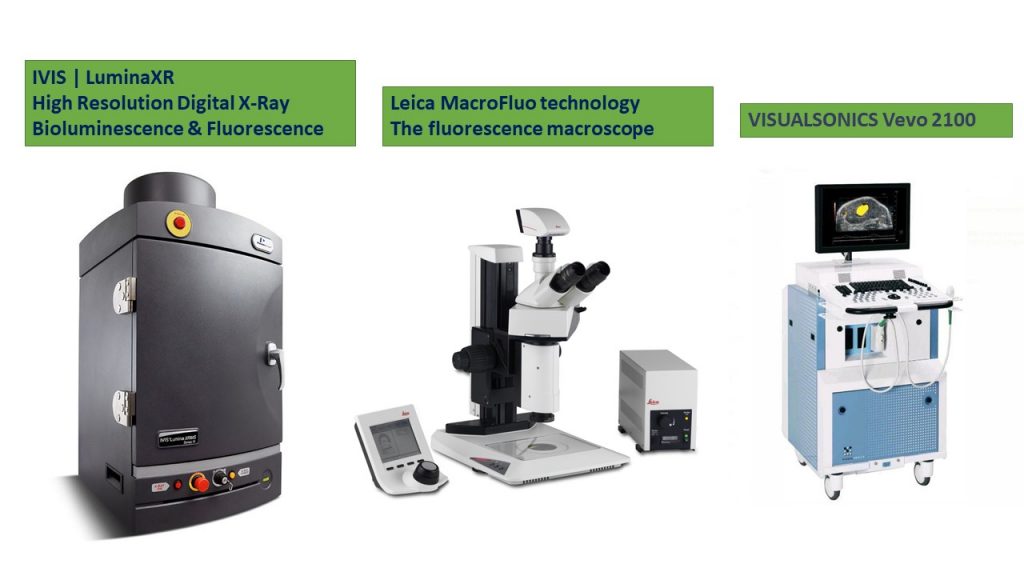
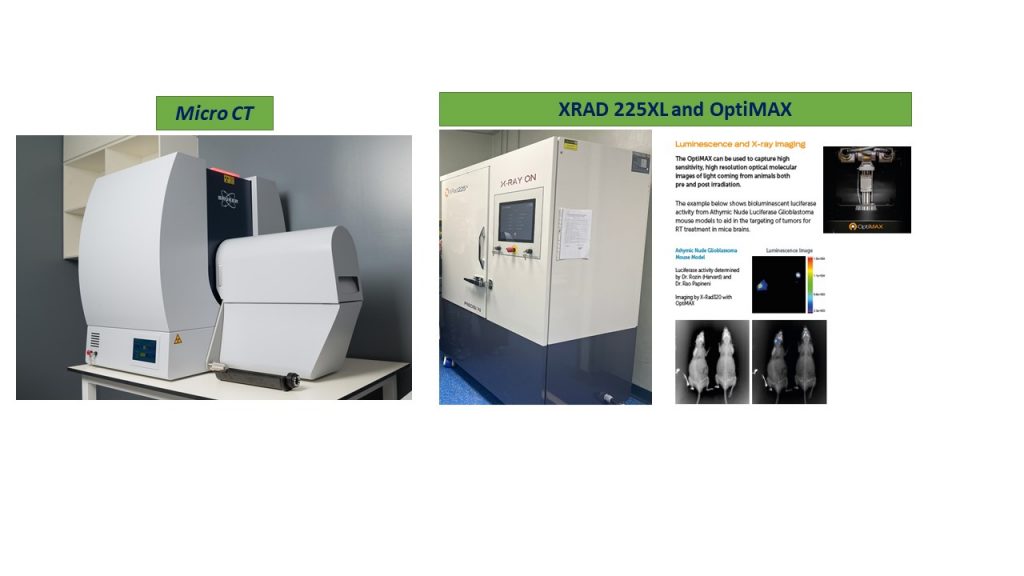
CanSERV — Il progetto “Providing cuttingedge cancer research services across Europe” [Bando HORIZON-INFRA-2021 SERV-01 (Research infrastructureservices to supporthealthresearch, accelerate the green and digitaltransformation, and advancefrontierknowledge (2021) (EUROPEAN COMMISSION Horizon Europe (HORIZON)] è finanziato dall’UE nell’ambito del programma Horizon Europe che fornisce servizi oncologici interdisciplinari e personalizzati. Il suo obiettivo è di offrire un portafoglio completo di servizi di ricerca legati all’oncologia a disposizione di tutti gli scienziati nei paesi membri dell’UE, nei paesi associati e oltre. Siamo coinvolti nella caratterizzazione e validazione di modelli murini e/o xenotrapianti derivati da pazienti da cancro del colon-retto mediante sistemi di imaging PET/TAC o bioluminescenza/fluorescenza (IVIS), in collaborazione con la SC Farmacologia Sperimentale.
La SSD Sprimentazione Animale è inoltre coinvolta in altri 6 progetti PNRR interni all’Istituto per lo svolgimento della sperimentazione in vivo, tra cui di maggiore rilevanza:
Contratto UBUY n. G00175 «Allestimento di metodi innovativi Anti-Biofilm per il Trattamento di Ferite Infette» nell’ambito del progetto di ricerca “One Health Basic and Translational Research Actions addressing Unmet Needs on Emerging Infectious Diseases PE00000007” – INF-ACT, in collaborazione con l’Istituto di Biochimica e Biologia Cellulare del Consiglio Nazionale delle Ricerche-Responsabile Dott. Giuseppe Manco.
“Theranostic roles for neutrophils and neutrophil extracellular traps in melanoma patients under checkpoint inhibitors” progetto di ricerca My First AIRC Grant 2020 (grant number 25123). Responsabile scientifico del progetto Dott.ssa Maria Rosaria Galdiero dell’Università Federico II di Napoli – Dipartimento di Scienze Mediche Traslazionali.
.
The research activity is characterized by:
- Study of the microbiome in gastric tumors.
- Impact of chronic stress on resistance to oncological therapies.
- Generation and development of Patient Derived Xenograft (PDX) mouse models.
- Use of transgenic models.
The research is divided into the following projects: Ricerca Corrente 2025-2027 Linea 1/24_25. Studio del microbioma nei tumori. “Characterization of biotherapeutic microbiota for prevention and chemo-immunotherapeutic treatment of gastric carcinomas – CHANGE”– Responsabile Scientifico Dott. Giuseppe Palma. Aims to identify the role of the microbiota and in particular of the Akkermansia Muciniphila strain in the ability to modulate chemo-immuno-therapy treatments in murine models of gastric carcinoma. Our goal is to investigate how A. Muciniphila is able to interact positively with the immune system improving the efficacy and efficiency of chemo-immuno-therapy treatments; in order to explore this objective the structure is equipped with the transgenic strain FVB/N-Tg(Ins1-GAS)1Sbr/J.
Ricerca Corrente Linea 4/1 — Impact of chronic stress on resistance to cancer therapies “Molecular targeting of beta-adrenergic receptors as a strategy to overcome resistance in head and neck cancer (HNSCC)” aims to identify and target the molecular mechanisms that correlate chronic stress with the progression of HNSCC and resistance to standard treatments and immunotherapy. Numerous studies, in fact, demonstrate that stress, through the increased production of catecholamines that act on beta-adrenergic receptors, activates a series of mechanisms that on the one hand induce tumor growth by creating a micro-environment favorable for the proliferation of metastases and on the other weaken the immune system response.
PNRR-POCScale-up the industrial development of CD99-null exTracellular vesicles (EVs) As theRapeutic Tools by using Ewing sarcoma as prototype (START)
The project is based on an Italian patent that concerns the therapeutic use of CD99-null extracellular vesicles and their pharmaceutical composition. In the project, CD99-null vesicles alone or in combination will be tested against Ewing sarcoma, a rare pediatric bone tumor with very limited therapeutic options for patients who do not respond to standard drugs. The project applies cutting-edge technologies (large-scale drug screenings (HTS); patient-derived xenografts and Zebrafish models; single-cell and spatial transcriptomics) to gain in-depth knowledge of the efficacy of these vesicles against a solid tumor. The effects generated in recipient cells, whether tumoral or normal, will be analyzed and the frequency of administration, as well as the best route of administration to obtain therapeutic effects, will be evaluated. The project also addresses issues related to the standardization of processing and storage of CD99-null vesicles in order to ensure product compliance and traceability, in view of its potential clinical use.
Four IRCCS partecipate to the project: IRCCS Istituto Ortopedico Rizzoli; Istituto Nazionale Tumori IRCCS “Fondazione G.Pascale”; IRCCS Istituto Tumori Giovanni Paolo II e IRCCS Istituto Romagnolo per lo Studio dei Tumori”Dino Amadori”
Projects of Great Importance (PGR) – collaboration between Italy and South Africa (NARA). The project: Multiparameter optimization and in vitro/in vivo assessment of antagonists targeting androgen receptor’s ligand binding domain and allosteric binding sites (Short title: In vitro/in vivo tests of New Androgen Receptor Antagonists – NARA). The NARA project is part of the collaboration projects between Italy and South Africa – Projects of Great Importance (PGR) included in the bilateral scientific-technological Executive Protocols – Ministry of Foreign Affairs and International Cooperation in collaboration with the Experimental Pharmacology .
REMEDI4ALL (BUILDING A SUSTAINABLE EUROPEAN INNOVATION PLATFORM TO ENHANCE THE REPURPOSING OF MEDICINES FOR ALL) [HORIZON-HLTH-2021-DISEASE-04 (EU) Call] in collaboration with the Experimental Pharmacology Unit
CanSERV — The project “Providing cutting-edge cancer research services across Europe” [Call HORIZON-INFRA-2021 SERV-01 (Research infrastructure services to supporthealthresearch, accelerate the green and digitaltransformation, and advancefrontierknowledge (2021) (EUROPEAN COMMISSION Horizon Europe (HORIZON)] is funded by EU under the Horizon Europe program that provides interdisciplinary and personalized oncology services. Its goal is to offer a comprehensive portfolio of oncology-related research services available to all scientists in EU member countries, associated countries and beyond. Our facility is involved in the characterization and validation of murine models and/or xenografts derived from colorectal cancer patients using PET/CT or bioluminescence/fluorescence (IVIS) imaging systems, in collaboration with the Experimental Farmacology Unit.
The Experimental Animal Unit is also involved in 6 other PNRR projects within the Institute for the conduct of in vivo Animal Studies.
UBUY Contract No. G00175 “Development of Innovative Anti-Biofilm Methods for the Treatment of Infected Wounds” as part of the research project “One Health Basic and Translational Research Actions addressing Unmet Needs on Emerging Infectious Diseases PE00000007” – INF-ACT, in collaboration with the Institute of Biochemistry and Cell Biology of the National Research Council – Project Leader: Dr. Giuseppe Manco.
“Theranostic roles for neutrophils and neutrophil extracellular traps in melanoma patients under checkpoint inhibitors” research project My First AIRC Grant 2020 (grant number 25123). Scientific Project Leader: Dr. Maria Rosaria Galdiero of the Federico II University of Naples – Department of Translational Medical Sciences.
TECONOLOGIE DISPONIBILI
PERSONALE E STAFF
DIRETTORE E RESPONSABILE DEL BENESSERE
Dr.ssa Francesca Bruzzese Office Napoli: 081 1777 0648 SSD Sperimentazione Animale (Na): 081.1777.0649 CROM (Mercogliano-AV): 0825.1911760/742 email: f.bruzzese@istitutotumori.na.it SCOPUS ORCID
DIRIGENTI
Dr.ssa Rita Lombardi Sede CROM (Mercogliano-AV): 0825.1911.719 email: r.lombardi@istitutotumori.na.it SCOPUS ORCID
RICERCATORE SANITARIO
TECNICO DI LABORATORIO
Dr. Antonio Luciano Sede CROM (Mercogliano-AV): 0825.1911760/742 Sede Napoli: Tel. 081.1777.0649 email: a.luciano@istitutotumori.na.it SCOPUS ORCID
TECNICO DI LABORATORIO (Contrattista)
Dr.ssa Milena Di Lanno Sede CROM (Mercogliano-AV): 0825.1911760/742 Sede Napoli: Tel. 081.1777.0649 email: milena.dilanno@istitutotumori.na.it ORCID
VETERINARIO Designato
Dott. Davide De Biase Sede CROM (Mercogliano-AV): 0825.1911760/742 Sede Napoli: Tel. 081.1777.0649 email: davide.debiase@hotmail.com SCOPUS ORCID
PERSONALE IN FORMAZIONE
Dott.essa MariaCarmela Mauriello – Biotecnologa – Studente in TSLB Sede CROM (Mercogliano – AV) : 0825.1911760/742; email:
Dott.essa Francesca Annunziata – Biotecnologa – Dottorato di Ricerca-Dipartimento di Biologia – Università degli Studi di Napoli “Federico II” — ORCID Sede CROM (Mercogliano – AV) : 0825.1911760/742; email:
PRINCIPALI PUBBLICAZIONI (Ultimi 5 anni)
Genomic profiling of a collection of patient-derived xenografts and cell lines identified ixabepilone as an active drug against chemo-resistant osteosarcoma. Manara MC, Bruzzese F, Formentini L, Landuzzi L, Pazzaglia L, Laginestra MA, Carrabotta M, Roca MS, Iannelli F, Grumetti L, Addi L, Parra A, Cristalli C, Pasello M, Bavelloni A, Carreras F, Ruzzi F, Bianchi G, Gambarotti M, Righi A, Budillon A, Lollini PL, Scotlandi K. J Exp Clin Cancer Res. 2025 Jul 8;44(1):195. doi: 10.1186/s13046-025-03440-5.
Valproic acid improves the efficacy of oxaliplatin/fluoropyrimidine-based chemotherapy by targeting cancer stem cell via β-Catenin modulation in colorectal cancer. Roca MS, Lombardi R, Testa C, Iannelli F, Grumetti L, Moccia T, Barile V, Addi L, Memoli D, Leone A, Di Franco S, Stassi G, Avallone A, Bruzzese F, Pucci B, Budillon A, Di Gennaro E. Cell Death Dis. 2025 Aug 1;16(1):583. doi: 10.1038/s41419-025-07902-8.
Drug-like molecules targeting androgen receptor’s allosteric binding sites selected by augmented AI and high-throughput screening as antitumor agents against prostate cancer. Bruzzese F, Iannelli F, Roca MS, Addi L, Grumetti L, Ahmed M, Budillon A, Gumede NJ. Biomed Pharmacother. 2025 Sep;190:118403. doi: 10.1016/j.biopha.2025.118403. Epub 2025 Aug 2. PMID: 40753934.
Raf kinase inhibitor protein modulator of gut microbiota and immunotherapy responses in cancer. Palma G, Bruzzese F, Meo C, de Nigris F. Biochim Biophys Acta Rev Cancer. 2025 Sep;1880(4):189364. doi: 10.1016/j.bbcan.2025.189364. Epub 2025 Jun 1. PMID: 40460898.
Identification and characterization of a new potent inhibitor targeting CtBP1/BARS in melanoma cells. Filograna A, De Tito S, Monte ML, Oliva R, Bruzzese F, Roca MS, Zannetti A, Greco A, Spano D, Ayala I, Liberti A, Petraccone L, Dathan N, Catara G, Schembri L, Colanzi A, Budillon A, Beccari AR, Del Vecchio P, Luini A, Corda D, Valente C. J Exp Clin Cancer Res. 2024 May 6;43(1):137. doi: 10.1186/s13046-024-03044-5.PMID: 38711119.
β2-AR inhibition enhances EGFR antibody efficacy hampering the oxidative stress response machinery. Del Vecchio V, Mele L, Panda SK, Sanchez-Pajares IR, Mosca L, Tirino V, Barbieri M, Bruzzese F, Luciano A, Marino FZ, Accardo M, Nicoletti GF, Papaccio G, Barbieri A, Desiderio V. Cell Death Dis. 2023 Sep 19;14(9):613. doi: 10.1038/s41419-023-06129-9
Microbiota Effect on Trimethylamine N-Oxide Production: From Cancer to Fitness-A Practical Preventing Recommendation and Therapies. Palma G Tacconi E, , De Biase D, Luciano A, Barbieri M, de Nigris F, Bruzzese.F. Nutrients. 2023 Jan 21;15(3):563. doi: 10.3390/nu15030563.Review.
Spontaneous cancer remission after COVID-19: insights from the pandemic and their relevance for cancer treatment. Meo C, Palma G, Bruzzese F, Budillon A, Napoli C, de Nigris F. J Transl Med. 2023 Apr 21;21(1):273. doi: 10.1186/s12967-023-04110-w.
Synergistic antitumor interaction of valproic acid and simvastatin sensitizes prostate cancer to docetaxel by targeting CSCs compartment via YAP inhibition. Iannelli F, Roca MS, Lombardi R, Ciardiello C, Grumetti L, De Rienzo S, Moccia T, Vitagliano C, Sorice A, Costantini S, Milone MR, Pucci B, Leone A, Di Gennaro E, Mancini R, Ciliberto G, Bruzzese F, Budillon A. J Exp Clin Cancer Res. 2020 Oct 8;39(1):213. doi: 10.1186/s13046-020-01723-7.
CLINICAL TRIALS
La SSD Sperimentazione Animale risulta attivamente coinvolta nei seguenti studi osservazionali:
COPRI — Caratterizzazione fenotipica e chemiosensibilità in vitro ed in vivo di COlturePRImarie derivate da tumori solidi di diversa origine — [Delibera del 14.12.2016 -emendamento n. 84/23 del 20/02/2023 – Protocollo CEI: 71/16]
EPOCA — Individuazione di nuovi marcatori prognostici/predittivi di resistenza al platino nel carcinoma dell’ovaio — [Delibera n. 1177 del 2.12.2022 – Protocollo CEI: 39/22 oss]
BREVETTI
Titolo: “Uso di Akkermansia Muciniphila nel trattamento di Patologie Infiammatorie e Neoplastiche”. Inventori: Franceca Bruzzese, Giuseppe Palma, Antonio Luciano, Alessandra Fusco. ( n° ITPF9970/IT — domanda italiana n. 102025000027157 depositata il 20 Ottobre 2025).
Titolo: “Combination of HDAC inhibitors and statins for use in the treatment of pancreatic cancer”. Inventori: Alfredo Budillon, Maria Serena Roca, Federica Iannelli, Francesca Bruzzese. (n° US20250213523A1).
Titolo: “Sintesi di complessi di metalli del gruppo 3 come molecole/farmaci per il trattamento dei tumori solidi”. Inventori: Carmela Saturnino, Pasquale Longo, Claudio Arra, Giuseppe Palma, Angelamaria Caporale, Annaluisa Mariconda, Maria Stefania Sinicropi, Francesco Puoci. ( n° 102016000046245 depositata il 05 Maggio 2016)
Titolo: “Nuovi Derivati Idrossi-Benzenici Recanti Un Gruppo Imminico N-Aril Sostituito come Molecole/Farmaci Per Il Trattamento Di Tumori Solidi”. Inventori: Carmela Saturnino, Claudio Arra, Giuseppe Palma, Annaluisa Mariconda, Maria Stefania Sinicropi, Francesco Puoci, Domenico Iacopetta. (n° 102016000130047 depositata il 22 Dicembre 2015)
ALERT!!!!

Formazione degli addetti ai compiti e alle funzioni di cui alla normativa vigente in materia di benessere degli animali utilizzati a fini scientifici:
……………………………..
Documentazione per sottomissione progetti in vivo: